Are those microPC's, like "Raspberry Pi 2", good enough for some new sort of mobile ubiquitous LAN extension systems? Will there be a new, technically driven, approach? MULEBERRY :)?
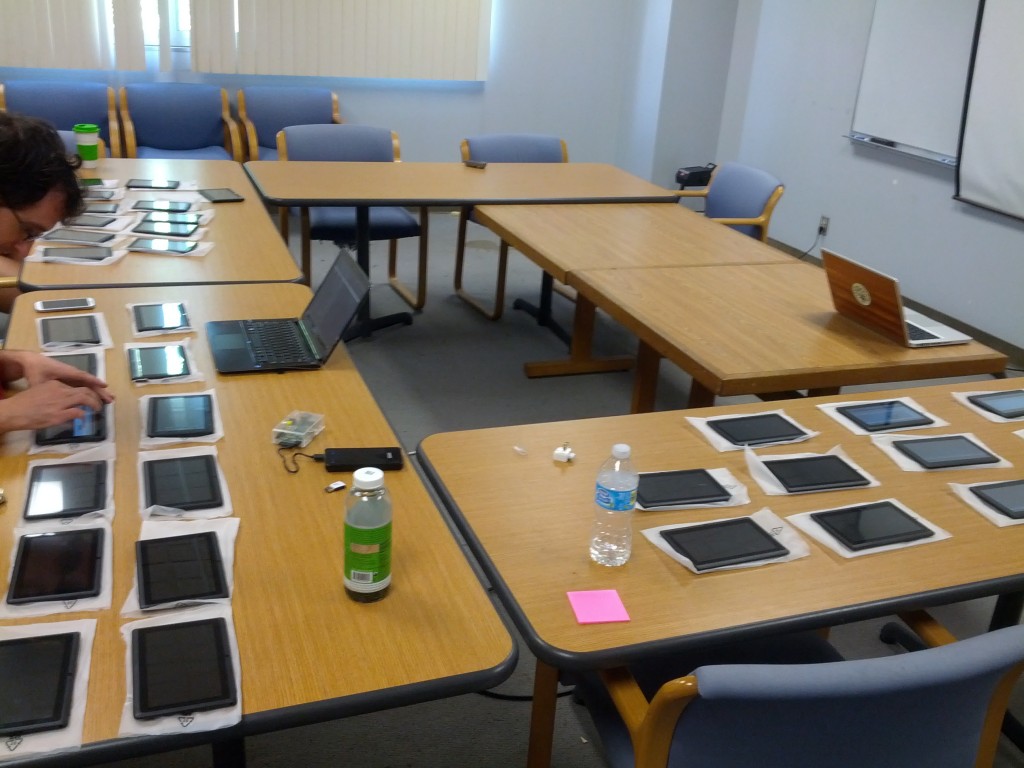
Raspberry Pi (old model; not the Raspberry Pi 2 one) has been practically approved to serve simultaneously a maximum of 35 Android tablets over WiFi, without errors.
We were unable to swamp the Pi server or its wireless connection even with 35 tablets connecting to it simultaneously.
Inexpensive Android devices, which have been proliferating through
the developing world, serve as excellent client devices to connect to a
Pi access point. How does the Pi hold up to the task of serving a
classroom full of tablet users over a single wifi dongle? We had been
warned that a small number of wifi clients would likely swamp the
connection, so last week we put it to the test.
The Raspberry Pi/Wi-Pi
combo held up smoothly, with 35 tablets simultaneously
navigating
through the KA Lite web interface and streaming Khan Academy videos.
Information Without Borders
- Sneakernet routing software project (GNU free open-source software).
Code is available. The description says that people meet at random and
trasnfer files, so emails can takes days or weeks. The OLPC Sneakernet
can control how long messages take, because the couriers would work to
an agreed schedule.
Wikipedia says – “The charity relief organization Information Without Borders
is attempting to implement a sneakernet routing protocol for providing
cheap Internet access to developing and post-conflict regions using
donated PDAs and mobile phones”.
Wi-Fi enabled motorbike - Motoman Article and Discussion pages.
Mobile Access Points / Wi-Fi Vehicles - First Mile Solutions - DakNet.
They provide a service with data delivery by Mobile Access Points;
Wi-Fi enabled motorbikes and buses. They visit villages and transfer
data to/from Wi-Fi enabled kiosks. Local people use the kiosks for
email, SMS, voicemail, web searches, and other local products and
services. The villagers can buy and sell products (medicines,
craft-items, seeds, fertilizers, books, cosmetics, music) through the
kiosks. The goods are delivered to them on the same vehicles as the
data. The website has a good range of DakNet articles and .PDF files
which explain the social-background and advantages/disadvantages of
real-time versus delayed file delivery services in rural areas
(store-and-forward systems). This social-enterprise company was set up
by people from MIT to provide low-cost data services, at prices as low
as $1 per user per month. ‘Dak’ is a Hindi word for ‘Post’ or ‘Postal’.
United Villages
Their website says "United Villages provides villagers in Asia, Africa,
and Latin America with a digital identity and access to
locally-relevant products and services using our low-cost,
store-and-forward "drive-by WiFi" technology. Our Mobile Access Points
(MAPs) are installed on existing vehicles (e.g. buses and motorcycles)
and automatically provide access for WiFi-enabled Kiosks along the
roads."
The best data mule is probably a smartphone packed on a Quadro- /Octocopter. There it could serve as data carrier and at the same time as a GPS navigation machine supporting waypointflights. Unfortunately waypoint flights are mostly forbidden anywhere.
So humans must replace copters and transport data.
Here is a short summary of all the commands (cooking-book like) without any of the comments above. So if you succeeded once, don’t care about comments, just do the essential work now: